
Spiritual director Jane Hoober Peifer explores what it means to “hold space” for someone living with deep trauma and how compassionate presence can become a powerful expression of God’s love.
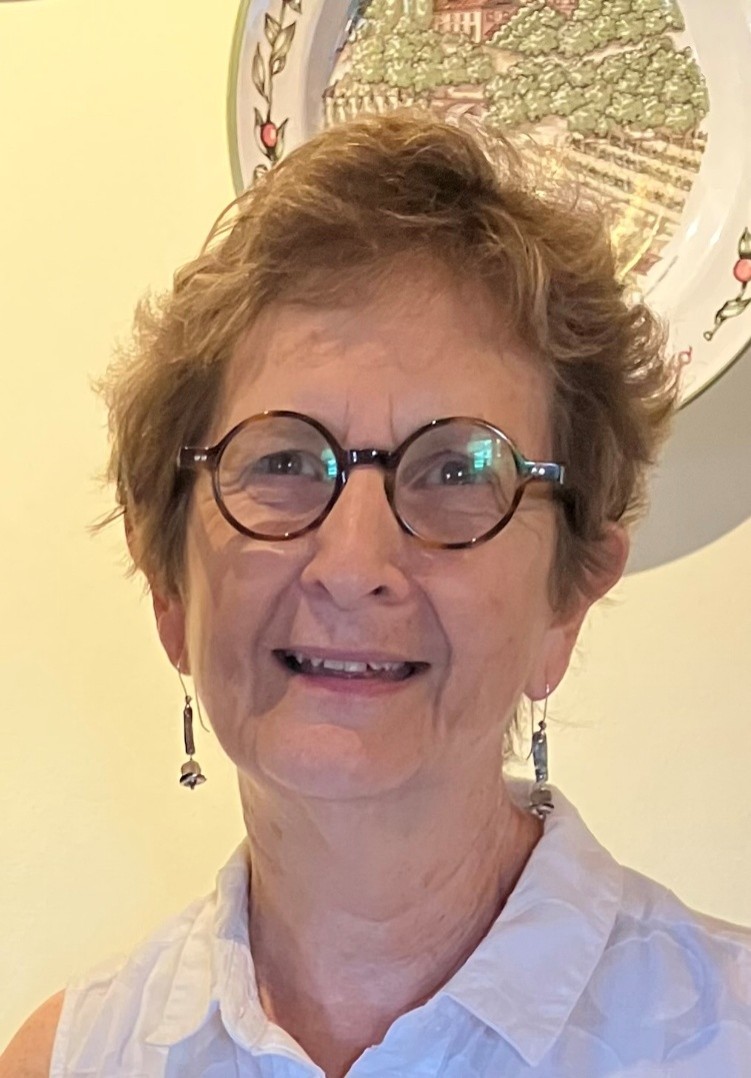 In her retirement from pastoral ministry, Jane Hoober Peifer has transitioned into providing spiritual direction and leading retreats. She considers the privilege of listening to the souls of fellow pilgrims as sacred work that she so often wished she had more time to do when she was a pastor. Living in Harrisonburg, Virginia, with her husband, Daryl, Jane enjoys nurturing house and outdoor plants, singing with The Blueridge Threshold Choir, who sing comforting songs for folks in illness or nearing death and participating with Shalom Mennonite Congregation – a beloved community of fellow Jesus followers.
This Menno Snapshots blog is part of a series by the Mennonite Spiritual Directors Network.
Most people in ministry eventually face dilemmas regarding how to care deeply for someone while maintaining healthy, appropriate boundaries. Over the course of 10 years, I wrestled with these questions as I accompanied “Vicki,” first as her pastor and later as her spiritual director.
When we first met, Vicki was 49 years old. She was a single (twice divorced) mother of two children from whom she was periodically estranged. In the last year of her life, she welcomed her first grandchild, before dying at age 59.
When we became acquainted, Vicki had already been involved in intense psychotherapy because of memories of childhood sexual abuse. She struggled with depression, anxiety and PTSD, and she eventually was diagnosed with Dissociative Identity Disorder. Even though she was an accomplished professional in her work life, her deep woundedness kept working its way to the surface. She spoke freely about how suicidal thoughts were a constant companion.
When breast cancer returned, she was relieved because now she could die from cancer instead of needing to take her own life. She just wanted to go home. She refused cancer treatment and began to prepare to die. She lived for another two years, which she described as another cruel trick from an absent God.
In the journey of dying, she repeatedly pulled in, and then pushed away, people who came to help her.
As her spiritual director, I was challenged to maintain appropriate boundaries, while simply holding space for her. Most of the time, I wondered if I was truly being helpful. She repeatedly affirmed that the only four people she trusted were her two therapists, her medical doctor and me. But I always knew that I could be easily removed from that list and fully expected it would happen
One of the difficulties in companioning Vicki was watching how quickly fear reclaimed her. She had numerous miraculous experiences which demonstrated God’s grace, presence and love. In those experiences, and when we would return to savor those experiences, she genuinely felt seen and cared for by God. But it was never long before fear and pain would return, along with anguished questions about why life was so hard and why God sometimes felt absent.
In my spiritual direction training, we read “Field of Compassion: How the New Cosmology is Transforming Spiritual Life” by Judy Cannato. She wrote:
“Love by its nature transforms … When we resonate with love, when we are living, breathing vibrations of love energy, we contribute to the Field of Compassion, the new consciousness that is gracing the world. … There are four attitudes or stances that I think will help us enflesh the Field of Compassion on earth. The first attitude is spaciousness. The word ‘compassion’ means literally ‘to suffer from the bowels.’ The image itself suggests not that I have entered into YOUR space, but that I have allowed you to enter MY space. This posture essentially says: ‘There is space in myself for you.”
These words describe what I learned over the 10 years of companioning Vicki. In the end, she found little help in most of the spiritual direction techniques that I kept in my pocket – things that were so often helpful in guiding other directees to places of experiencing God’s love, consolation and grace. Vicki’s wounds were deep, and even though she certainly experienced some healing along the way, the impact of those wounds was always with her. Eventually, I realized that I wasn’t being called to find the right technique or the perfect insight. I was being called to make room for her. I decided that there was space in me for her.
I felt tremendous freedom when I made that decision. I knew that my only job was to hold space for her as she made her way home. She was not afraid to die. As she told me numerous times, “I just want to go home.” God’s love opened up space in me for her.
From Cannato’s book again:
“Spaciousness, contemplation, commitment and imagination: Cultivating these four stances will help us hold and engage the energy required to manifest and maintain a Field of Compassion. They help us, first of all, receive and hold love that pours itself out for us … as we ourselves become more spacious, more contemplative, more committed to the work, and more imaginative in our approach, a Field of Compassion emerges and transforms us – and transforms the world.”
Learn more about the Mennonite Spiritual Directors Network at mennosdn.org.
You can find links to the Mennonite Spiritual Directors Network website and other congregational and ministerial resources on MC USA’s Church Vitality webpage: https://www.mennoniteusa.org/ministry/church-vitality/