

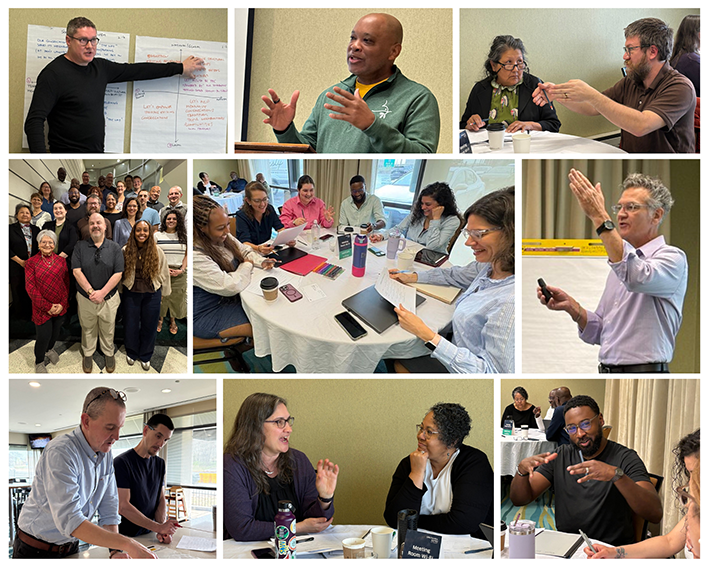
Top row, from left: Benjamin Sywulka, Glen Guyton, Susan Hart and Matt Pritchard.
Middle row: Structure review committee; (at table) Mahlet Mamo, Amy Zimbelman, Christina Manero, Jerrell Williams, Alicia Maldonado-Zahra and Amy Gingerich; Dr. Andy Hines. Bottom row: Eric Massanari and Todd Lehman; Rosetta Landis and Marisa Smucker; Jerrell Williams. Photos by Camille Dager.
To learn more about the Reimagining MC USA initiative, visit our web portal. For more images from the workshop, visit MC USA’s photo album on Flickr.
MC USA’s Structure Review Committee gathered to prayerfully envision and prepare for the church’s future in 2040 through a scenario planning process designed to strengthen leadership, support congregations and foster unity amid changing landscapes.
A single guiding question shaped two days of deep listening, discernment and imagination as 23 committee members from across MC USA gathered to reflect on the future: What will the world that MC USA exist in look like in 2040?
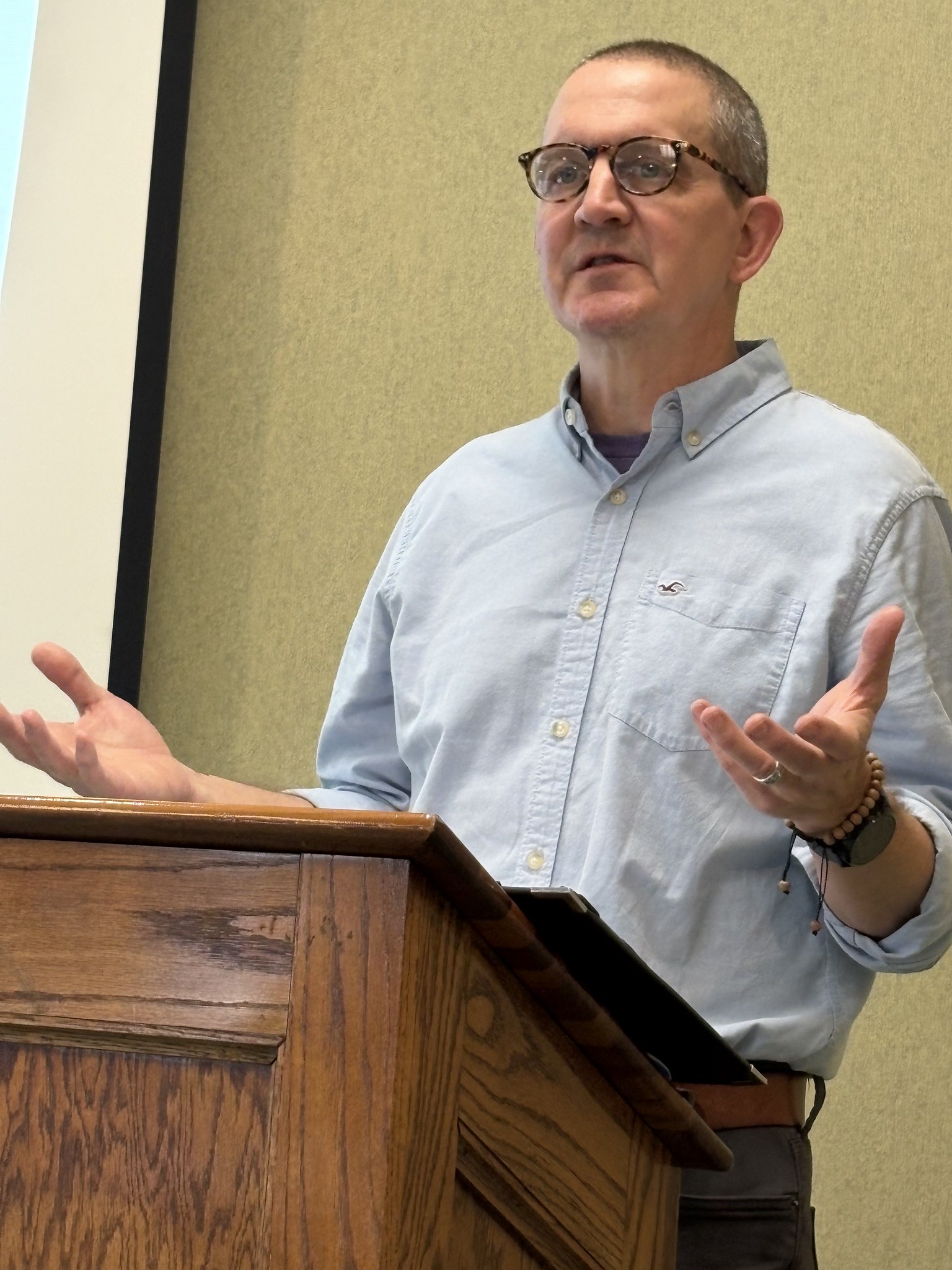
Eric Massanari
From the beginning, the tone was grounded in faith. In his opening devotion, Eric Massanari invited the group to hold both the challenges of today and the promise of what could come next.
“Unless a grain of wheat falls into the earth and dies, it remains just a single grain, but if it dies, it bears much fruit.” – John 12:24
That image of letting go so something new can grow stayed with the group throughout their time together in Chicago, April 15–16, at the first in-person meeting of Mennonite Church USA’s Structure Review Committee.
“What are we, the church, being asked to release into God’s good earth … so that some new fruit might emerge?” Masanari, executive conference minister for Pacific Northwest Mennonite Conference, asked the group.
A process grounded in faith and purpose
The heart of the gathering was a “Scenarios Workshop,” led by Executive Director Glen Guyton and Dr. Andy Hines from the University of Houston.
At its simplest, the process helped leaders step back from day-to-day decisions and ask a bigger question: How can we prepare today for the church we are becoming?
“This process is a disciplined way to explore multiple plausible futures for MC USA, test how our current structures might perform in those futures and equip the Executive Board to govern with greater clarity, flexibility and long-term faithfulness to our mission,” explained Guyton.
The goal is not to predict the future or turn people into futurists. It is to help leaders make wise, faithful decisions today so congregations can thrive tomorrow, he explained.
Guyton emphasized that the work is focused primarily on the role and structures of the Executive Board and staff, with the goal of strengthening the church’s ability to serve its congregations.
“This process is essential for MC USA,” said Rosetta Landis, a member of the Executive Board and the Structure Review Committee. “We have been through a lot in the last number of years,” she continued, “and we want to be intentional about who we are and where we’re going.”
Building on listening and preparation
This moment did not come out of nowhere. It builds on months of listening and preparation across the denomination.
Following the 2025 Delegate Assembly, a small MC USA team launched resources for congregations, gathered feedback and invited a diverse group of leaders to help guide this work. At the same time, additional research and interviews helped paint a clearer picture of what is shaping the church today.
Together, this groundwork ensured that the conversations in Chicago were rooted in real experiences across MC USA.
Naming what is changing
During the workshop, participants named the realities already affecting the church. These included changes in leadership, shifting expectations around church life, and new ways people connect and belong.
They also reflected on broader changes in society, such as fewer people identifying with organized religion, younger generations approaching faith differently, and more pastors serving in bi-vocational roles.
At the same time, they considered larger forces shaping the future, including polarization, the influence of Christian nationalism, evolving understandings of authority, rapid technological change, and a growing desire for authenticity, especially among younger people.
These conversations led to important questions about the future; questions about how MC USA engages in peace and justice work; how it invests resources; and what kind of leadership and structure will best support ministry in the years ahead.
Listening across differences
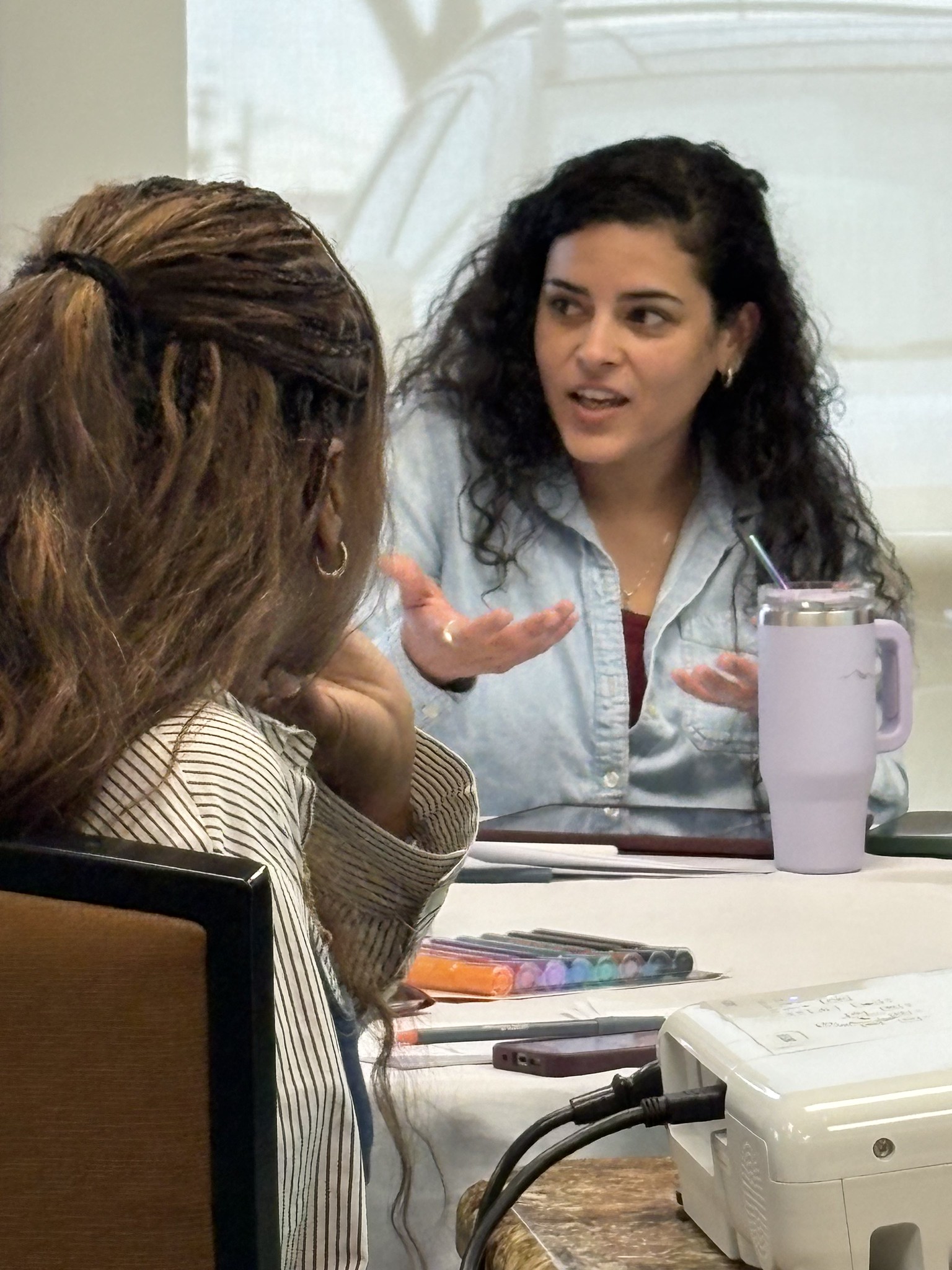
Alicia Maldanado-Zahra
One of the most meaningful parts of the gathering was the spirit in the room.
Participants came from different backgrounds and perspectives, yet many noted how deeply people listened to one another.
“We’ve experienced a lot of attrition and losses in the church. Though these bring grief, they also give rise to a certain degree of clarity, and some new creative energies that I find very hopeful,” said Massanari.
“We’ve always seen ourselves as a church on the margins,” added Iris de León-Hartshorn, MC USA associate executive director of Operations. “We’re a discipleship committed to following Jesus and that could be a house church or a church of a hundred. Size, in my experience, has never been at the forefront.”
“Something that surprised me during the table conversations was the sense of agreement,” said Alicia Maldonado-Zahra of the Structure Review Committee. “We could just understand each other, even though we are coming from different places and have different lived experiences – and that happened within the greater group discussions too. There was a sense of camaraderie, which I deeply appreciated.”
Landis shared a similar experience:
“What I found interesting was the ongoing effort by each person at my table to really listen in to each other and to integrate others’ stories into their own to see a bigger picture of the church.”
Imagining what could be
The workshop concluded with a creative and energizing exercise. Participants worked in groups to imagine what MC USA might look like in 2040.
Each group developed a different picture of the future, shaped by the realities and questions discussed throughout the gathering. Some were hopeful. Some were challenging. All were designed to stretch thinking and spark new ideas.
Through storytelling and collaboration, participants explored how the church could adapt while staying rooted in its core commitments.
Landis reflected, “What I’m hearing from others is deep conviction, deep love of the church, love of Scripture and the Anabaptist tradition, as we seek to really understand our last 500 years and grow into our next.”
What comes next
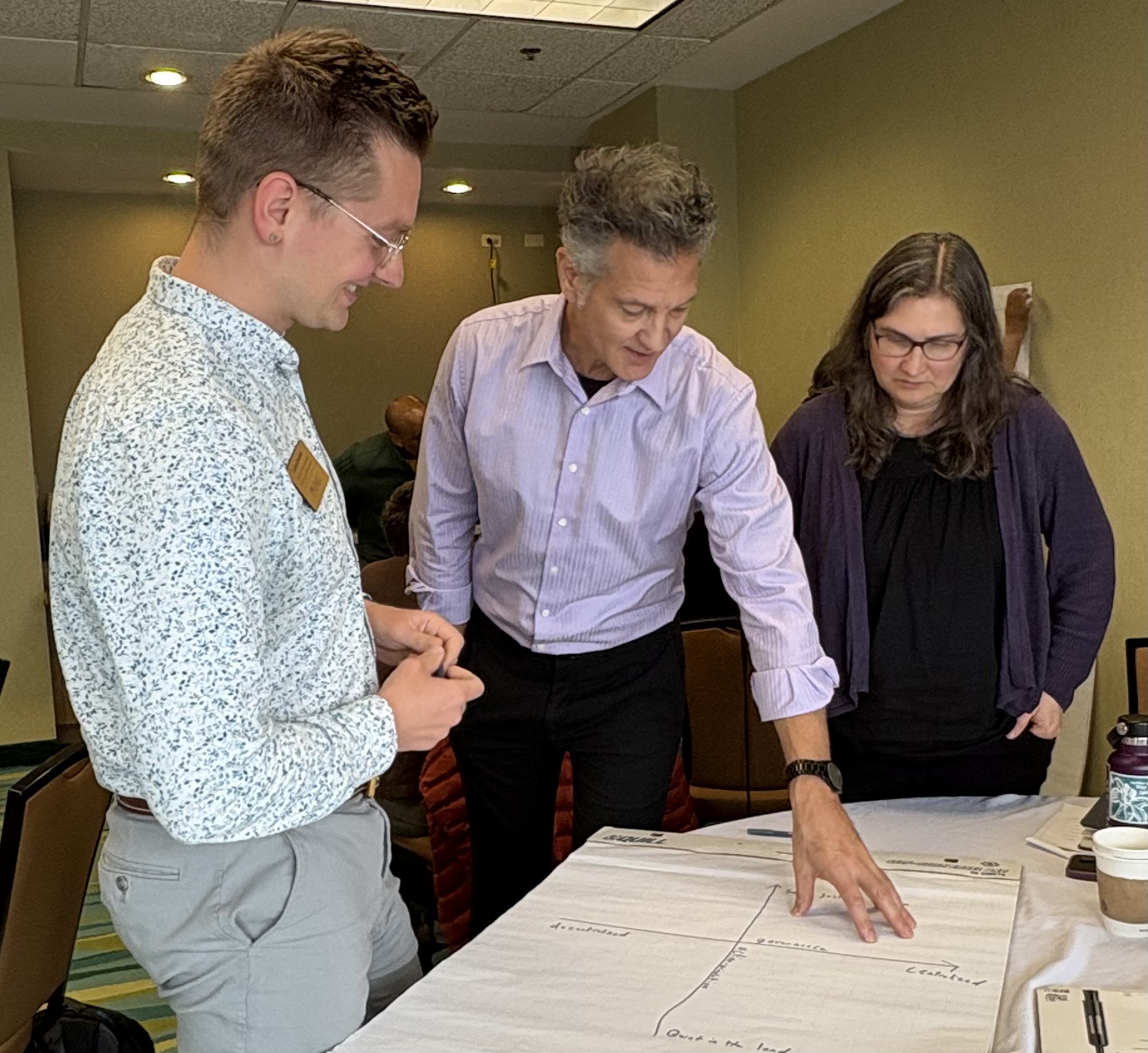
Luke Litwiller, Dr. Andy Hines, Rosetta Landis
This work is just beginning.
In the coming months, the committee will continue refining these ideas and exploring what they mean for the future of MC USA. The next gathering will take place May 13 in Indianapolis, where participants will begin shaping recommendations for the Executive Board. A final report is expected in June.
“It’s really important to support this collective effort … to find ways to really empower congregations to thrive by bringing together the things we’re learning across the whole network,” said Benjamin Sywulka, a member of the Structure Review Committee.
As the process continues, the foundation remains the same: faith, humility, and hope.
“My prayer for MC USA is that we walk humbly together and that we seek God’s reconciling love and grace amongst ourselves and in our local communities – and work to bring that healing and hope to the world,” said Landis.