


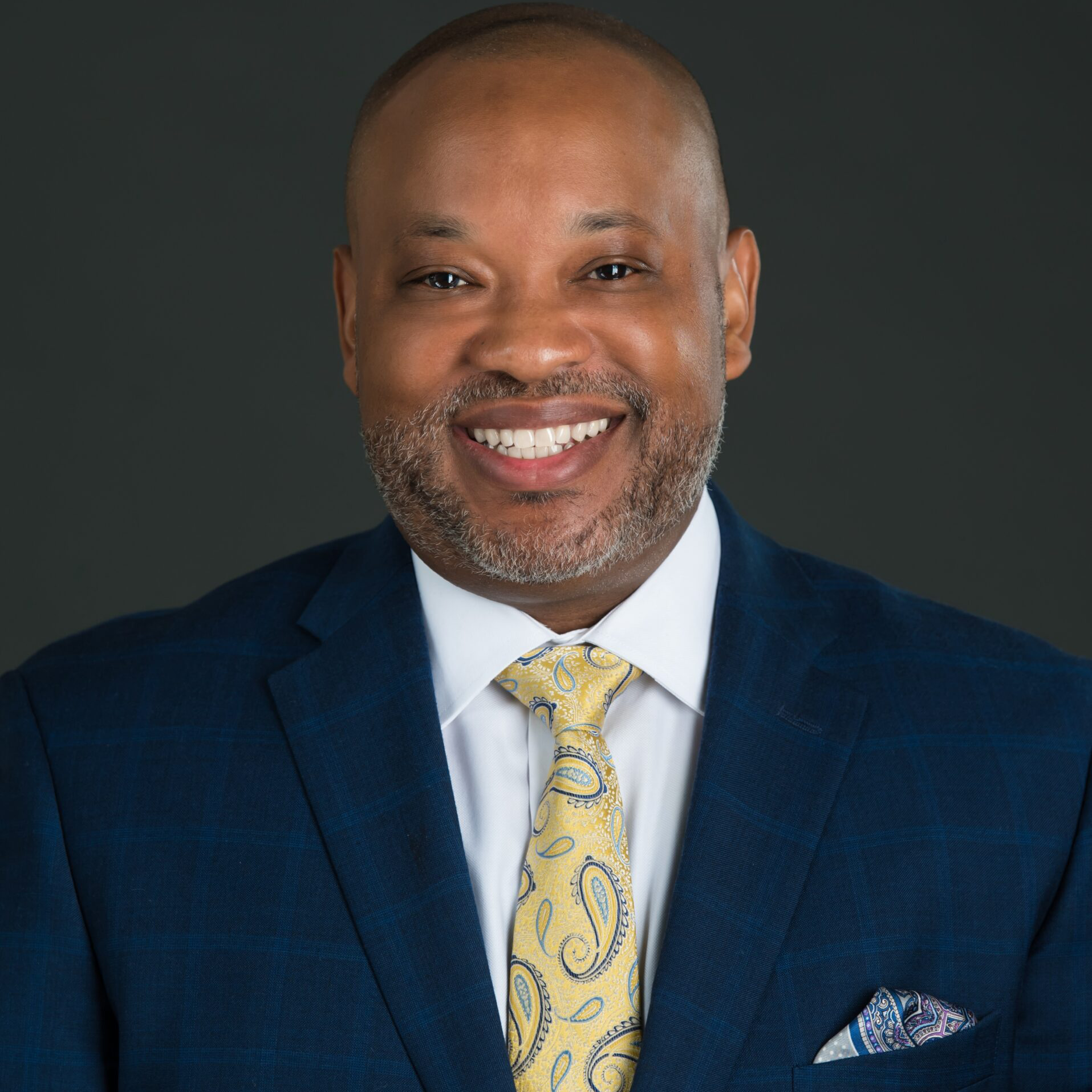
 Glen Guyton shares insights from the recent meetings of the Structure Review Committee for the “Reimagining MC USA” initiative and explores how MC USA can faithfully adapt its structures, leadership and connections to serve the church and the world in 2040.
Glen Guyton is the executive director of Mennonite Church USA.
Mennonite Church USA is continuing its reimagining and structure review process with a hopeful question at the center:
What will the world we serve look like in 2040?
That question is helping us look beyond immediate concerns and imagine how MC USA can faithfully serve congregations, area conferences, constituency groups and emerging communities over the next 15 years. This process is not about rushing toward predetermined answers. It is about listening, learning and discerning together how our shared structures can better support our calling as followers of Jesus.
MC USA’s bylaws remind us that our purpose is to participate in God’s work of setting things right in a broken world and sharing God’s love through worship, witness and life together. They also name Jesus as the center of our faith, community as the center of our lives and reconciliation as the center of our work. That calling remains our foundation. The question before us is how our structures, decisions and behaviors can help us live into that calling with courage and clarity in a changing world.
The Structure Review Committee was created to examine MC USA’s membership structure, funding model and governance, with an eye toward greater transparency, effectiveness and unity. The work includes engaging stakeholders across the denomination, reviewing bylaws and governance documents, and collaborating with people who bring expertise in organizational development, finance, missiology and governance.
This work is also being shaped by strategic foresight. Rather than trying to predict one single future, foresight helps us explore several plausible futures and ask better questions today. What if the church becomes smaller but more locally rooted? What if Anabaptist witness grows through loose networks beyond traditional membership? What if digital tools reshape how congregations connect, learn and share resources? What if younger generations carry Anabaptist values into new forms of worship, justice and community?
These are not conclusions, but faithful questions.
Faithful questions for the future
In recent workshops with the University of Houston Foresight team, participants explored possible futures for MC USA in 2040. The scenarios invited leaders to wrestle with tensions already present in our church: local and national identity, tradition and innovation, social justice and spiritual formation, belonging and institutional commitment, centralized support and decentralized ministry. One scenario imagined MC USA as a “Quiet, Localized Oasis,” thriving through intercultural competency and local mutual aid. Another imagined “Strong Wind, Rising Tide,” where MC USA’s impact widens through far-reaching faith, justice, conflict resolution and shared wisdom.
Building a church for tomorrow
Across the process, several themes are emerging. One is the need to build systems that help congregations and conferences adapt to a changing world. Participants asked what congregations need, what MC USA may need to stop doing, and what work makes the most sense for congregations, conferences and the national body to do together.
Another theme is leadership formation. If MC USA is preparing for 2040, we must ask how we will cultivate leaders who can serve in polarized communities, bridge generations, navigate cultural complexity and remain grounded in Anabaptist faith. The work ahead may include better alignment among congregations, conferences, schools, camps, agencies and other Mennonite-affiliated ministries that already shape spiritual leadership.
Strengthening communication and connection
The process is also raising important questions about communication and connection. How can MC USA create digital infrastructure that helps people find us, helps congregations find one another, and helps stories of faithfulness travel more easily across the church? In the most recent workshop, participants named the need for communication systems that connect people inside MC USA while also creating clearer pathways for those outside our current structures who are drawn to Anabaptist faith and practice.
Loose ties, shared mission
There is also a deeper invitation emerging: What if some of what we have experienced as fragmentation could also become, with prayer and intention, a wider distribution of Anabaptist influence?
Mennonites have often created ministries, agencies, movements and partnerships that eventually take on life beyond their original institutional forms. That does not have to be understood only as loss. It may also be a sign that Anabaptist values are taking root in more places. In this sense, “loose ties” can become a faithful network, connected enough to share identity and purpose, flexible enough to respond locally, and strong enough to mobilize when the Spirit calls. As one of the consultants framed it, more loose ties can mean more overall capacity to do good.
When structure serves mission
This does not mean structure no longer matters. It means structure must serve mission. The next 15 years will require MC USA to be clear about what should be held nationally, what should be strengthened regionally, what belongs locally, and what can be shared through partnerships. It will require us to ask not only, “Who has authority?” but also, “Who is best equipped to serve this need?” and “How do we move resources, trust and capacity closer to the places where ministry is happening?”
The work ahead will also require new behaviors. We will need the humility to listen across difference, the courage to release what no longer serves the mission, the discipline to build what future generations will need, and the faith to trust that God’s future is larger than our current forms.
Preparing for the 2027 Delegate Assembly
MC USA’s reimagining process was designed to be participatory. Current plans include ongoing communication, opportunities for feedback, review with leadership bodies and preparation for the 2027 Delegate Assembly, where final outcomes and progress updates are expected to be shared. The timeline remains subject to change, but the commitment remains steady: to help MC USA discern how our structure can better support our mission and vision.
Keep praying, listening and imagining
As we continue this journey, we invite congregations, area conferences, agencies, constituency groups and members across MC USA to keep praying, listening and imagining with us. What will the world we serve look like in 2040?
What kind of church will be needed in that world?
And what structures, decisions and behaviors must we begin shaping now so that MC USA can remain faithful, connected and ready to join God’s healing work for generations to come?
To learn more, visit the Reimagining MC USA web portal.