

ELKHART, Ind. (Mennonite Church USA) — From distributing bicycles in rural Colorado to gathering neighbors around shared tables in Texas, four Mennonite Church USA congregations are turning faith into action through 2025 Justice Fund grants.
In 2025, MC USA awarded four grants, ranging from $500–$2,500, to congregations addressing urgent needs related to immigration justice and the ecological impacts of climate injustice. The grants support grassroots ministries rooted in partnership, community collaboration and Anabaptist commitments to peace and justice.
“The Justice Fund is one way we embody our call to follow Jesus into the hard and hopeful places of our communities,” said Lorraine Stutzman Amstutz, MC USA’s denominational minister for Peace and Justice. “When congregations listen deeply to their neighbors and respond with courage and compassion, they reveal the Spirit already at work. Through these grants, we are simply joining God’s movement of healing, dignity and shared flourishing.”
2025 Justice Fund awardees
Anabaptist Fellowship of Alamosa pedals toward equitable access
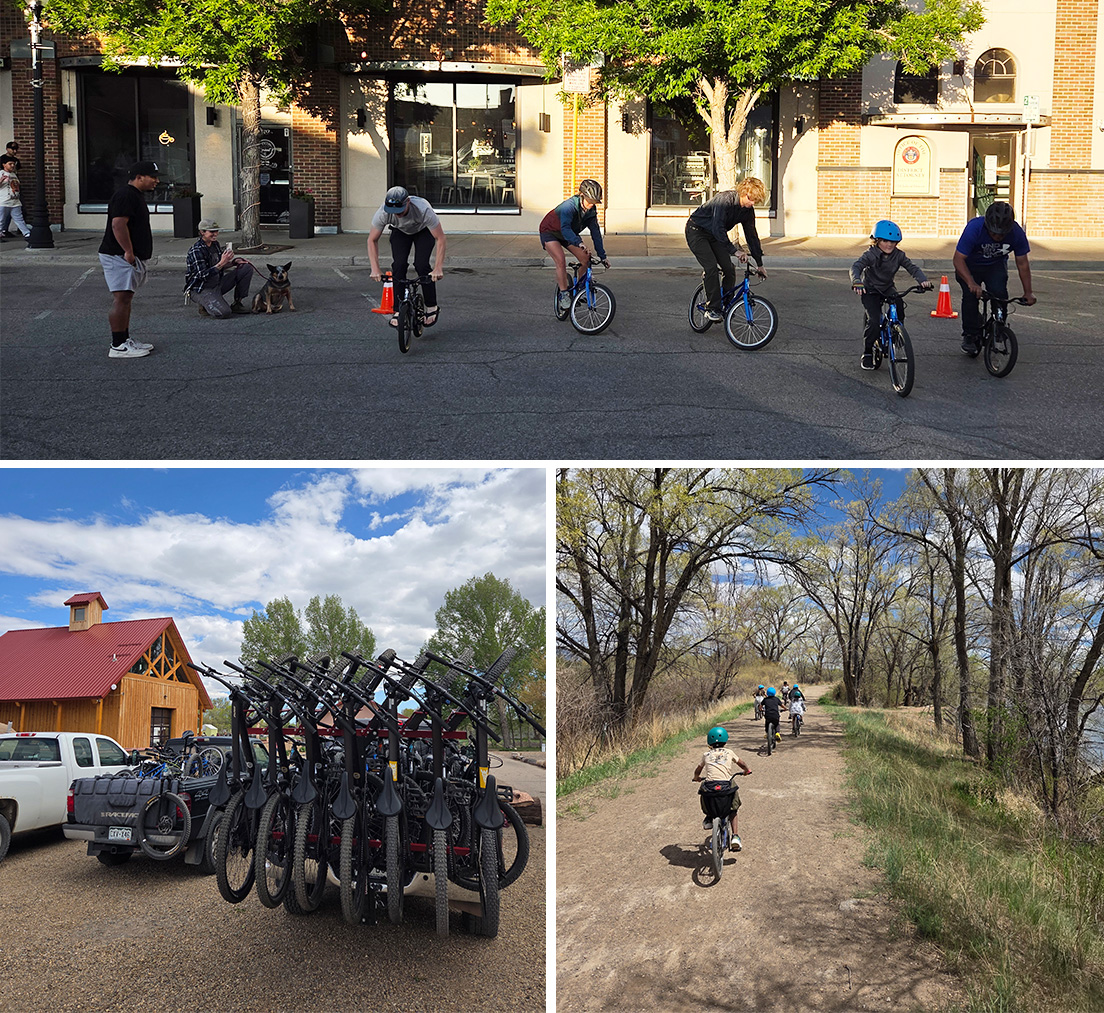
Anabaptist Fellowship of Alamosa makes a difference in their local community through the Alamosa Bike Coalition. Photos provided by Alamosa Bike Coalition
In a high-poverty region where reliable transportation can determine whether someone reaches work, school or medical care, the 15-member Anabaptist Fellowship of Alamosa is living out God’s justice in practical ways. Without ordained leadership, the congregation has become an “incubator,” serving as the original fiscal agent and early partner for the Alamosa Bike Coalition — a community initiative rooted in the church’s commitment to neighbors’ wellbeing.
The ministry began when former participants in Mennonite Voluntary Service, graduates of Eastern Mennonite University, started refurbishing donated bikes for vulnerable community members. Today, with support from MC USA’s Justice Fund, the coalition provides free bikes, open repair shop hours where anyone can work on their own bicycles and bilingual outreach in a region where many residents speak Spanish as their first language.
“One of our core values is equitable access to transportation,” said Executive Director Liz Breckbill. The funding helped supplement the program’s budget to provide bilingual staff, ensuring neighbors are welcomed and understood, she explained.
Congregational coordinator Alice Price emphasized the importance of representation, saying, “Accurately representing the community in how we offer our services is more welcoming and inviting, especially to those who are more marginalized.”
Volunteers from the congregation serve on the coalition’s board, host community events and help neighbors gain independence through mobility. In 2025 alone, the coalition distributed 150 bikes — connecting people to essential services and community life.
“The Justice Fund helps us know that we have a connection to the larger denomination, even though we don’t have ordained leadership and we are somewhat distant from other MC USA churches in our Mountain States region,” said Price.
Grand Rapids Mennonite Church grows a peace coalition
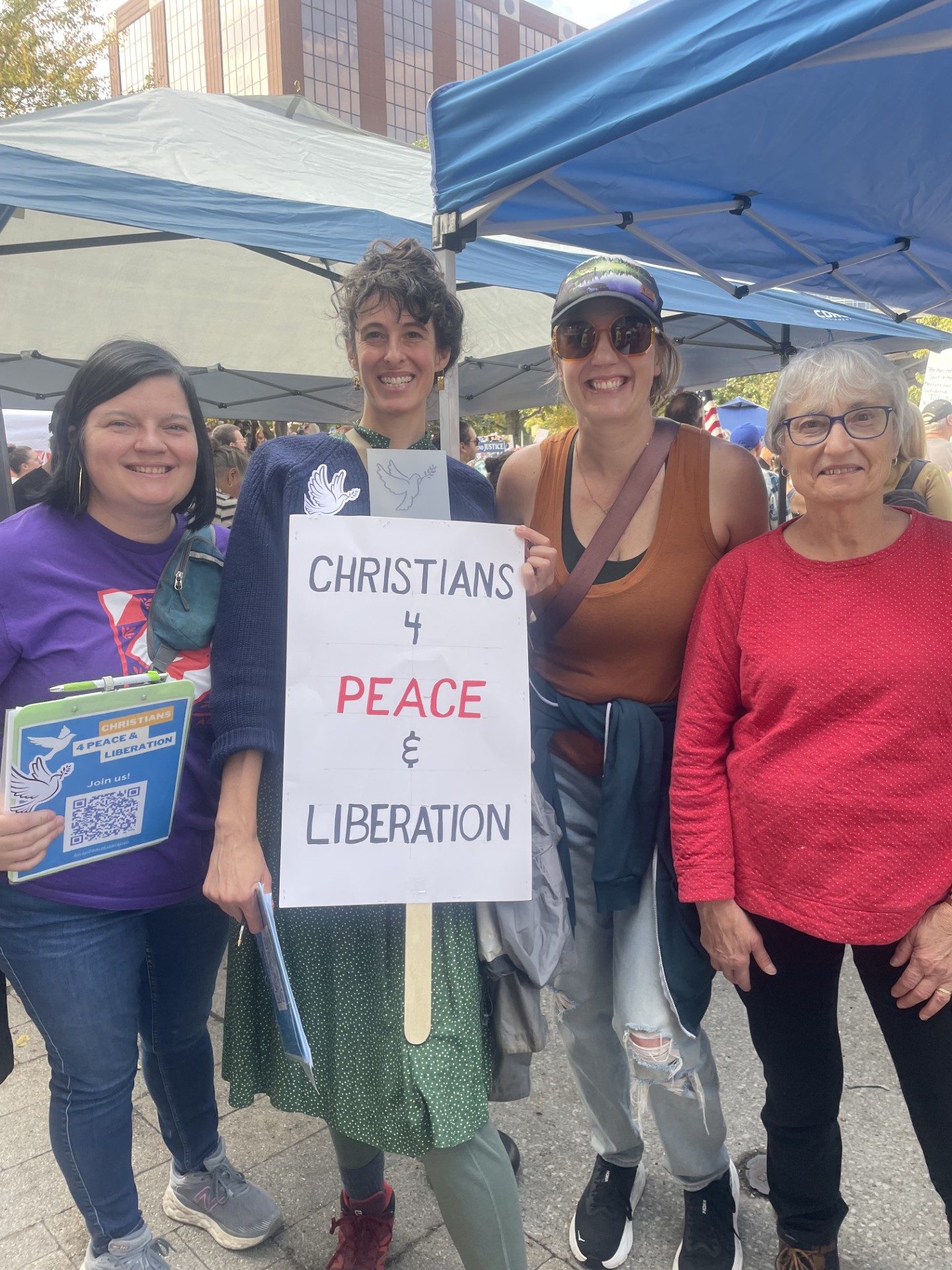
Alaina Dobkowski, pastor of Grand Rapids Mennonite Church, and co-organizers Emily Ulmer, Susan Kragt and Kathy Snyder connected with community members at a local action last fall. Photo provided by Alaina Dobkowski.
A congregation of just eight households, with a pastor serving seven hours a week, Grand Rapids Mennonite Fellowship in Michigan dreamed of forming a ministry in Grand Rapids, modeled by Mennonite Action. They prayed. They built relationships. They listened. And, guided by the Spirit, they began gathering with others to build a community of faith and courage. Pastor Alaina Dobkowski described how their small congregation felt called to connect with others who “care about the work of peace and liberation for all, as violence intensifies against our most vulnerable community members.”
With support from the Justice Fund, the fellowship gathered a growing coalition of more than 80 people from eight to 10 different churches — Catholic, Episcopal, Mennonite and more —meeting monthly for potlucks, prayer and equipping. These gatherings connected participants with immigrant rights organizers, rapid-response trainings, and clergy providing pastoral care in a nearby detention center.
Dobkowski shared how meaningful this has been for their congregation: “It’s been encouraging for people in a time when we’ve needed every bit of encouragement.” She added that the Justice Fund grant “makes a big impact for a small community like ours,” supporting speaker honoraria, basic equipment, administrative time and supplies that help them expand their ministry and prepare for a more active role in the community. “We feel supported and encouraged,” she said, “We planted seeds, and MC USA is helping us water them.”
Lima Mennonite Church embraces cross-cultural ministry
Lima Mennonite Church in Ohio, a congregation of about 35 people, has blossomed into a vibrant, cross-cultural community.
When immigrant families began arriving in their town in search of work, Lima Mennonite Church simply listened. They offered space for free English classes. They welcomed newcomers into worship, even when language differences made communication challenging. Members provided rides to church, medical appointments and grocery stores when families had no transportation of their own. Pastor Jeff Boehr, who joined Lima Mennonite during the pandemic, described this as “transformative” for the congregation that once questioned whether it should even exist. He said, “We looked at each other and said, this feels like God speaking about why we’re here.”
The Justice Fund helped meet basic needs, including transportation, food support and other daily necessities, at a time when the congregation’s compassion fund could not stretch far enough. Boehr said that the added support demonstrated that, “MC USA is tuned in to where God is moving among us in the churches on the ground.” He added, “It would be wonderful if people were encouraged and inspired by our outreach to consider creatively what this might mean in their own communities.”
Iglesia Cristiana Roca de Refugio builds community through shared tables
In San Antonio, Texas, the 32-member Iglesia Cristiana Roca de Refugio is responding to the pressures facing immigrant families by strengthening relationships one table at a time. Through its partnership with Nuevos Vecinos, a church-founded ministry, and with support from MC USA’s Justice Fund, the congregation is piloting a grassroots outreach model that equips neighbors to host simple meals and foster connection within their own apartment communities.
“We asked ourselves, ‘How can we engage the same members of the community that we’re serving to lead in what we’re trying to do?’” said Pastor Dianne Garcia.
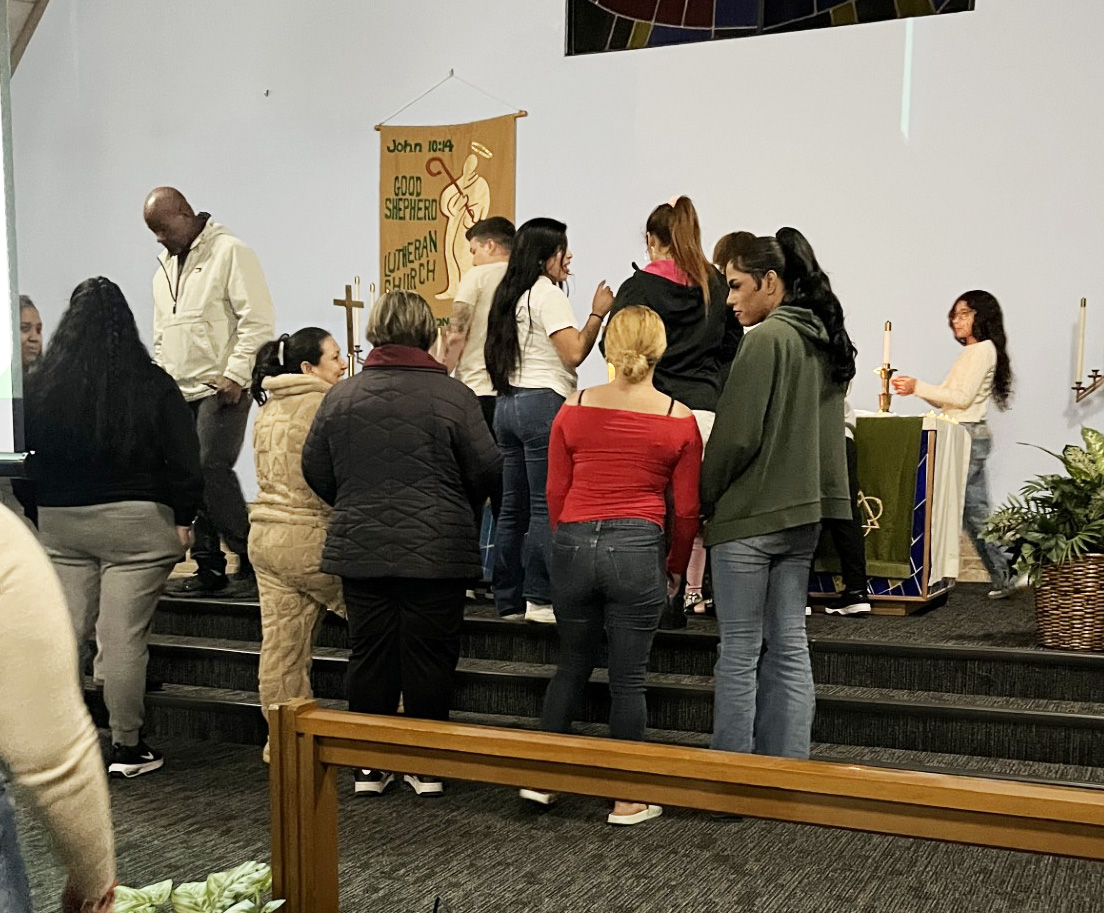
Members of Iglesia Cristiana Roca de Refugio are connecting with and resourcing neighbors through simple, shared meals. Photo provided by Dianne Garcia.
The resulting community connectors program kicked off in January, providing training and modest resources so trusted neighbors could “cook a simple meal and invite their neighbors and really just have a time to talk and eat,” explained Garcia. These gatherings create space for prayer, mutual support and practical resource-sharing — strengthening resilience in communities navigating isolation and fear.
“The goal is to invite new people – not with the idea to grow our church membership, but to reach people who are right now sitting at home and maybe too afraid to go out,” Garcia said.
The Justice Fund is helping launch this pilot program, enabling leaders to train participants, resource community hosts and evaluate the model’s impact for future growth.
“The work that we’re focusing on is building community,” said Garcia, adding, “I would love for more churches to engage in community building and to engage in mutual relationship.”
How to apply for a 2026 Justice Fund grant
The Justice Fund accepts applications year-round from MC USA churches that are engaged in social justice ministries. While all applications will be considered, the current socio-political circumstances surrounding immigration and the ecological impact of climate injustice have created additional urgency in the need for ministries related to these fields. Thus, for 2026, the Justice Fund will continue to focus on providing grants to churches that are collaborating with others within their communities to work on the issues of immigration and climate justice.
Churches seeking consideration for the Justice Fund Grant must be:
- Actively engaged in their community and partnering with another church or organization to work on issues addressing immigration justice, climate justice, racial justice, poverty and/or police brutality/reimagining policing
Or, - Seeking start-up money to begin working on immigration justice, climate justice, racial justice, poverty and/or police brutality/reimagining policing in their local communities, in addition to being committed to partnering with another church or organization.
MC USA will give priority to congregations working with organizations led by BIPOC (Black, Indigenous, people of color) in their community, as well as congregations with less than 150 members. Previous recipients are eligible to apply for a new grant, but priority will be given to first-time applicants. MC USA accepts applications on a rolling basis. The online application is available here.
Be part of the change by donating today!
The Justice Fund is a mutual aid initiative, funded by donations from individuals and churches across MC USA. To help MC USA churches throughout the country engage in this work, donate to the Justice Fund.
Written by Camille Dager.